Building a Five-Star Arrival Experience at Your Campground
The first fifteen minutes of a guest's stay quietly set the ceiling for everything that follows—and most parks give them away.
Ask a guest what they remember about a stay, and they rarely start with the mattress or the Wi-Fi speed. They start with how they felt when they pulled in. The arrival experience is the single most underleveraged moment in outdoor hospitality, and building a five-star arrival experience at your campground is one of the highest-return investments an operator can make—not because it costs the most, but because it shapes every judgment a guest makes for the rest of their stay.
I've operated boutique hotels where a flawless arrival justified a nightly rate several times higher than the property down the street, and I've walked into RV parks with beautiful sites and premium amenities where a confusing, cold, or chaotic check-in undid all of it before the guest ever reached their pad. The lesson is consistent across every category of hospitality: arrival is where trust is either built or broken, and it happens fast.
Here's how the best outdoor hospitality operators design an arrival experience that feels effortless to the guest and pays dividends across occupancy, reviews, and rate.
Why the First Fifteen Minutes Decide Everything in Campground Arrival Experience
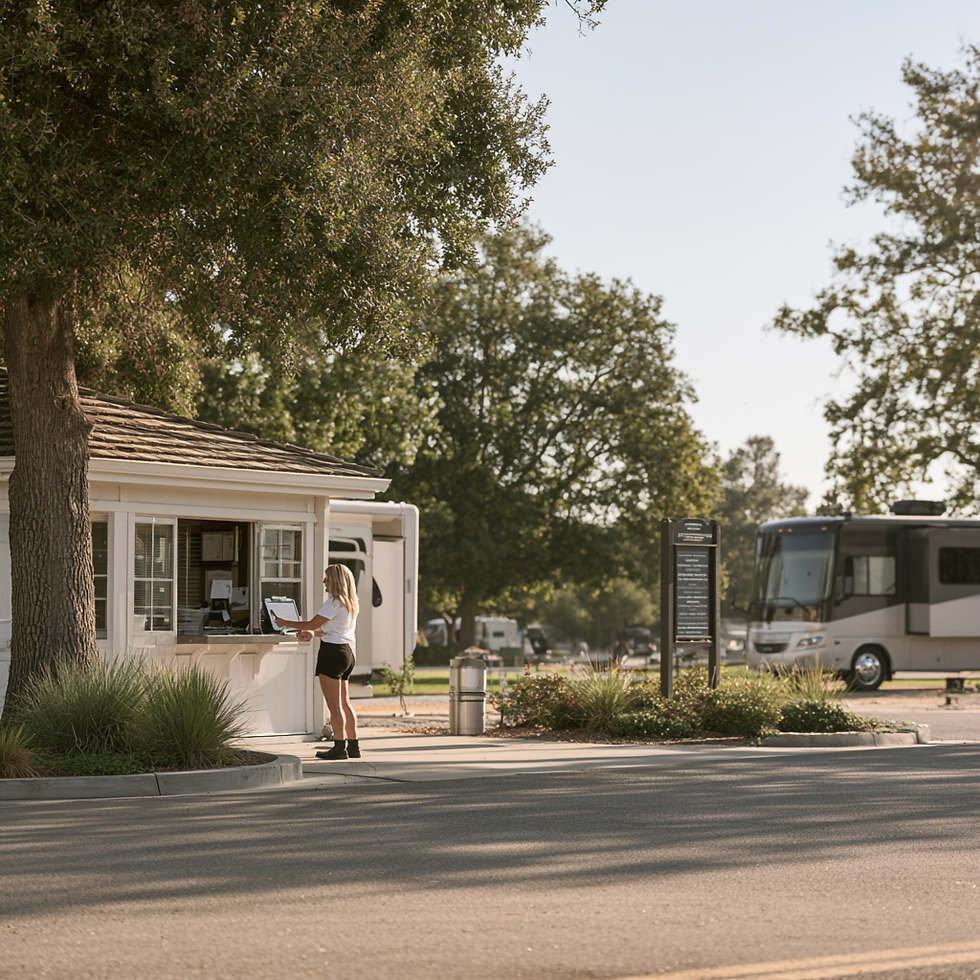
Psychologists call it the anchoring effect, and hospitality operators live it every day. The first impression a guest forms becomes the frame through which they interpret everything afterward. A guest who arrives to a warm, organized, competent welcome will forgive a minor maintenance issue later. A guest who arrives to a locked office, unclear signage, and a frazzled staff member will notice every flaw for the rest of the stay—and mention them all in the review.
This is why arrival deserves disproportionate attention. It is not one moment among many; it is the moment that colors all the others. In practical terms:
It sets the perceived value anchor. A premium arrival makes your rate feel justified.
It reduces friction complaints. Guests who understand their site and amenities upfront generate fewer support requests.
It shapes the review. Reviews are written from memory, and arrival dominates memory.
It builds the relationship. The welcome is where a transaction starts becoming a return visit.
Mapping the Arrival Journey
You cannot improve what you haven't mapped. Walk your own arrival experience as if you were a first-time guest arriving after a long, tiring drive—because that is exactly who most of your arrivals are. Trace every touchpoint from the highway to the picnic table:
The approach. Is your entrance easy to find and well-signed from the main road?
The entry. Is it obvious where to stop, where to check in, and where to wait?
The welcome. Is a person or a clear process ready, or is the guest left guessing?
The wayfinding. Can the guest find their site without a three-point turn and a phone call?
The site itself. Is it clean, clearly marked, and exactly as described at booking?
The follow-through. Does anyone confirm the guest is settled and comfortable?
Each of these is a chance to either add friction or remove it. The parks that excel treat the entire sequence as one designed experience, not a series of disconnected tasks.
The Luxury Hospitality Standard: Anticipation Over Reaction
The defining trait of luxury hospitality is anticipation. A great boutique hotel doesn't wait for you to ask for the thing you need—it has already thought of it. That mindset translates directly to outdoor hospitality, and it's what separates a good campground from a memorable one.
Anticipation in practice looks like this:
Pre-arrival communication that tells guests exactly what to expect—directions, gate codes, check-in process, and a warm note of welcome—before they're stressed and searching on the shoulder of a highway.
A prepared site that's clearly marked and ready, so the guest never wonders whether they're in the right spot.
A personal greeting that uses the guest's name and acknowledges anything you already know about them—a returning guest, a special occasion, a first visit.
Proactive guidance on the things guests always need but often forget to ask: where the bathhouse is, quiet hours, how to reach staff after dark.
None of this requires a luxury budget. It requires forethought, standards, and a team trained to deliver them consistently. That's the real luxury: the feeling of being expected and cared for.
Personalization That Scales
Operators often assume personalization means expensive perks. It doesn't. The most powerful personalization is simply paying attention:
Recognize returning guests by name and history. Your reservation system already holds this—use it.
Acknowledge the occasion. An anniversary or a first camping trip deserves a sentence of acknowledgment.
Match the greeting to the guest. A family with restless kids needs different guidance than a retired couple settling in for a month.
Remember preferences. A guest who requested a shaded site last year will be delighted you noticed.
These touches cost nothing and compound into loyalty. They are also exactly the kind of first-hand hospitality that guests describe glowingly in reviews, which feeds directly back into occupancy and rate.
The Operational Backbone Behind a Great Welcome
A five-star arrival looks effortless to the guest precisely because of the operational discipline behind it. Charm without systems collapses the moment a park gets busy or a key staff member is out. The welcome has to be engineered.
Standardize it with an SOP. Document the entire arrival sequence—greeting, verification, site assignment, orientation, follow-up—so every guest receives it regardless of who's working. Consistency is what turns a good welcome into a reliable brand experience.
Staff the arrival window intentionally. Know your peak check-in times and schedule your strongest, most personable team members into those windows. Arrival is not the shift to hand a brand-new hire alone.
Use technology to remove friction, not to remove people. Self-check-in and digital gate codes are excellent for late or after-hours arrivals and for guests who prefer autonomy. But automation should be a convenience option layered on top of genuine hospitality, never a replacement for the human warmth that defines the category.
Close the loop. Build a simple post-arrival check—a text, a quick site visit, a note at the office—that confirms the guest is settled. This single habit catches small problems before they become bad reviews and signals a level of care most parks never reach.
Train relentlessly. The difference between an order-taker at the check-in window and a genuine host is training and standards. Invest in your team's hospitality skills the way a fine hotel invests in its front desk, and your arrival experience becomes a durable competitive advantage.
Where Outdoor Hospitality Is Heading
Guest expectations in the RV resort and glamping space are rising quickly. Travelers who once accepted a purely functional check-in now arrive expecting the seamless, personalized experience they get from the best hotels and short-term rentals. The parks and resorts capturing this rising demand are the ones treating arrival as a designed, branded, human experience rather than an administrative formality. As the outdoor hospitality market matures and competition intensifies, the arrival moment is becoming a genuine differentiator—and a reason guests choose one property over another and pay more to do it.
Bringing It Together
A five-star arrival experience isn't about grand gestures or expensive amenities. It's about anticipation, consistency, and genuine care delivered at the exact moment a guest is deciding how they feel about your property. Map the journey, remove the friction, greet with warmth and personalization, and back all of it with the operational discipline of a documented SOP and a well-trained team.
Get the first fifteen minutes right and you raise the ceiling on everything that follows—the reviews, the loyalty, the willingness to return, and the rate you can confidently command. In outdoor hospitality, the welcome is not a task to get through. It's the foundation of the entire guest relationship, and it deserves to be operated like one.
About Amity Outdoors
Amity Outdoors provides consulting for RV parks, RV resorts, campgrounds, boutique hotels, and outdoor hospitality businesses. We help operators strengthen operations, revenue optimization, guest experience, and hospitality leadership, and we conduct comprehensive operational assessments designed to identify opportunities and elevate performance across every part of the guest journey.


Comments